Neither brand wins outright. Pick Sub-Zero if you want a company that makes nothing but refrigeration, with a separate cooling system for the fridge and for the freezer and a choice between a stainless look and a fully paneled one. Pick Gaggenau if your kitchen is planned around slim, flush columns that disappear behind cabinet doors and you value very quiet running. Both give long service when they have room to breathe and get basic care, so the better choice depends on your layout and taste.
Below: how each is built, how it keeps food cold, where trouble starts and what ownership means after the warranty.
Two different ideas of what a built-in should look like
Sub-Zero divides its full-size models into two families. Classic is the line the company points you to when the refrigerator will stand at the end of a run or have a side partly on show, because its stainless frame is meant to be seen. Designer shows far less metal and is made to blend into the surrounding cabinetry behind matching panels.
The sizes differ too. Classic (BI) units come in 30, 36, 42 and 48 inch widths and carry a flip-up grille across the top. Designer units come 24, 30 and 36 inches wide, and their grille sits down near the floor.
If you are reading older paperwork or a resale listing, the names changed in March 2019. What used to be sold as Built-In is now Classic, what used to be Integrated is now Designer, and PRO kept its name.
Gaggenau treats the refrigerator as one module in a wall of tall columns. You choose a fridge column, a freezer column or a combined unit and set them side by side, so the kitchen designer can build the run to the exact width of the wall. The RC472705 is a useful yardstick: a 30-inch refrigerator holding 16.8 cu.ft. (475 litres), rated at 40 dB (re 1 pW) for noise, with a temperature you can set anywhere from 35 °F to 46 °F.
How each brand keeps food cold
Sub-Zero calls its Classic approach Dual Refrigeration. The fresh-food side and the freezer each run on their own system, which brings two everyday benefits. Smells from leftovers stay out of the frozen food and the ice cubes, and the air around your produce is not pulled across a freezing coil, so lettuce and cheese keep their moisture instead of drying out.
Gaggenau reaches a similar separation by another route. When the fridge and freezer are separate columns, each is its own appliance with its own cooling, so the air in one never mixes with the other. On a combined unit such as the RVB497790 freezer refrigerator, the manual suggests 37 °F (3 °C) for the fridge and 0 °F (-18 °C) for the freezer, and those numbers make a sound target for any premium unit. Sub-Zero owners can find the matching checks in our guide to setting and checking Sub-Zero freezer temperature.
Where problems usually start on either brand
The badge on the door has less to do with breakdowns than airflow and moisture do. Both brands meet the same handful of trouble spots:
- Condenser coils packed with dust or pet hair, which make the compressor run long and let the cabinet warm up.
- Door gaskets that stop sealing, letting damp air in and building frost.
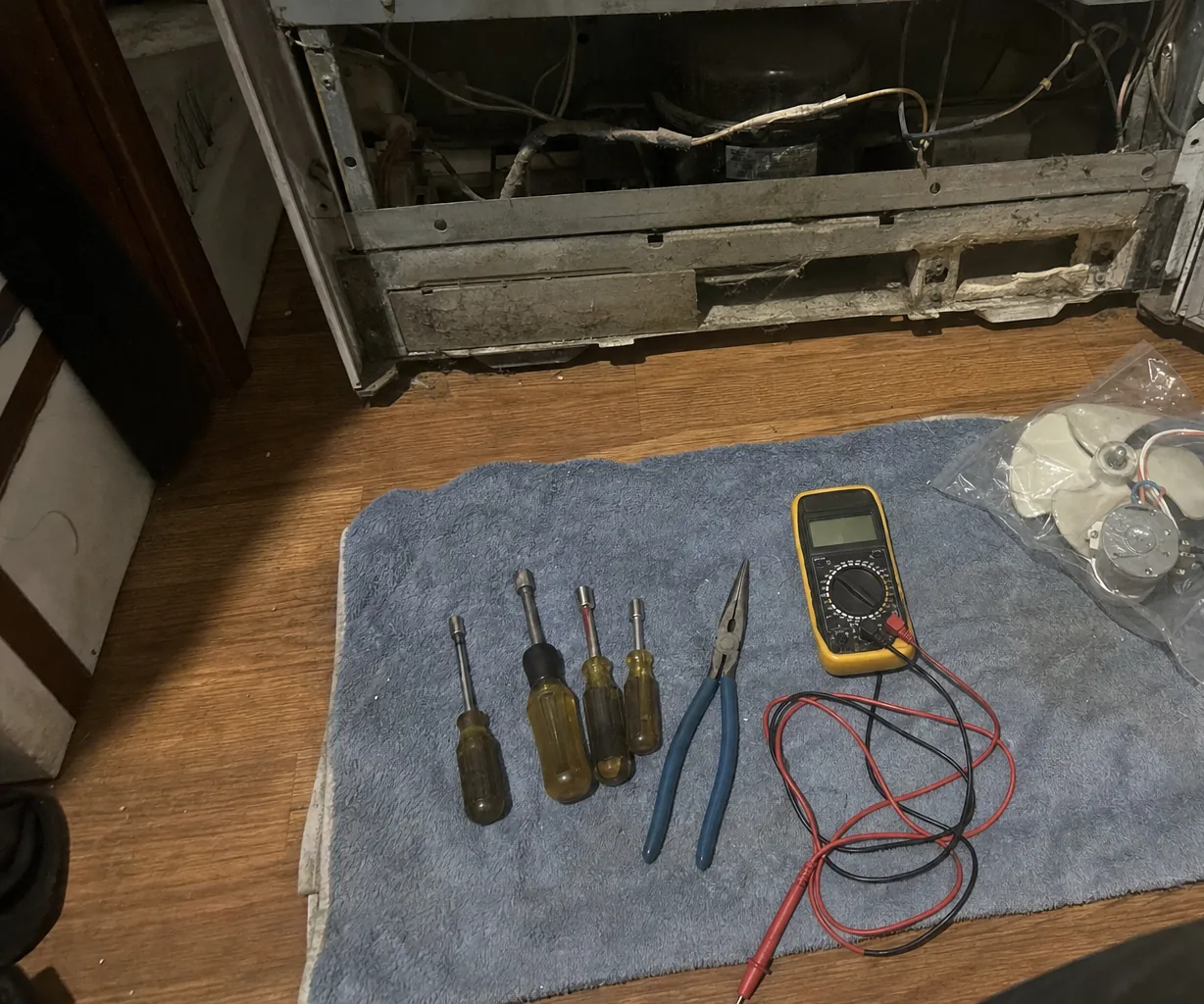
- Fan motors that wear, turn noisy or stop, so one section warms while the other stays cold.
- Ice makers, water valves and supply lines that drip or stop filling.
Grille position changes the chore. On a Classic unit the top grille stays clear of floor dust but sits high up, so it gets forgotten. A Designer grille near the floor is easy to reach yet collects lint and hair faster. A Gaggenau column is installed fully flush, so the vents called for in its installation instructions must stay open; a blocked vent will warm any built-in, whatever the brand.
In humid kitchens across the First Coast, especially near the ocean, the door seal and the condenser coil deserve the first look.
Two Gaggenau checks cost nothing. If an RVB497790 has a working display and lights but is not cooling, the manual’s first suspect is showroom mode: open Settings, then Advanced, and switch off Demo mode, because the unit will not cool while it is on. Its water filter should be changed every 6 months, sooner if Replace filter appears or the water flow visibly weakens, and a bypass cap can take the filter’s place for good if the house already has an external filtration system.
Service, parts and warranty
For Gaggenau appliances bought in the U.S. or Canada on or after January 1, 2025, the maker covers defects in materials and workmanship for five years from the original delivery date. While that coverage is running, contact the manufacturer first. We are an independent service, not manufacturer-authorized, and we repair both brands after that window or when you want a second look.
Parts should always be matched to the exact serial number. On Sub-Zero Classic (BI, CL) over-and-under models, the serial tag is inside the fridge door near the top hinge. Side-by-side models carry it inside the freezer door, and Classic French-door models inside the left-hand door. Gaggenau owners will find the rating plate location in their use and care manual.
Both makers also live under the same refrigerant rules. Since the EPA took up the 2017 edition of UL 60335-2-24 in 2018, a home cooling circuit charged with a hydrocarbon such as R-600a, R-290 or R-441A may carry as much as 150 grams (5.29 ounces), where the earlier ceiling was 57 grams. Those gases burn, so sealed-system work on a newer unit of either make needs a technician equipped for them.
Repair cost follows the part more than the logo. A door gasket or seal replacement typically runs $230–$620, and an evaporator or condenser fan motor $250–$580, with the firm figure given after the $80 diagnostic. Set against a typical replacement unit range of $8,600–$19,400, a sound cabinet with one failed part is usually worth fixing.
Which one suits your kitchen
Choose Sub-Zero Classic when the refrigerator will be seen from the side or stand alone, or when you want a 42 or 48 inch width. Choose Sub-Zero Designer or a Gaggenau column when you want the fridge hidden behind cabinet panels. Lean toward Gaggenau if you like building a run from separate columns, want very quiet operation and are buying new, with the five-year coverage that comes with it.
Whichever you pick, measure the opening carefully, keep the ventilation path clear and plan for the condenser to be cleaned on a regular schedule. For model-specific help, see our Sub-Zero service page or our Gaggenau service page.