Brand — Sub-Zero
Sub-Zero Repair Across the First Coast
Built-in and integrated refrigeration, wine storage and undercounter units. Dual-compressor designs that fail in ways freestanding boxes do not.
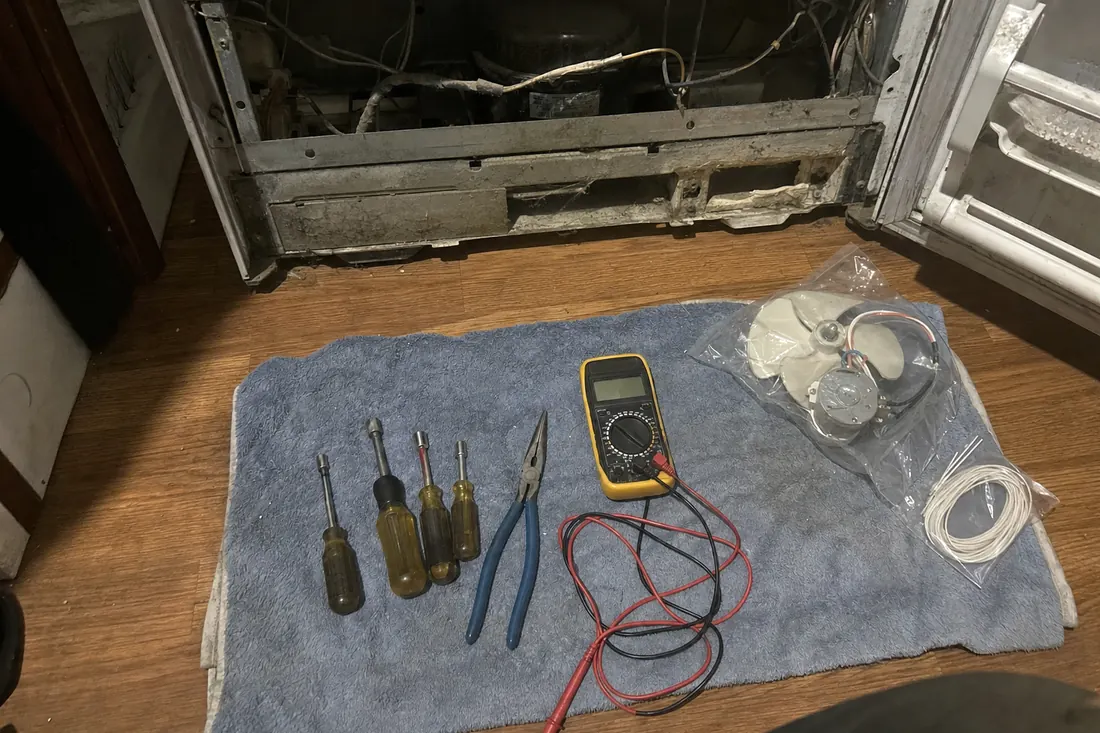
Sub-Zero builds refrigeration into cabinetry rather than standing it in a gap, and that single design decision drives most of what we get called out for. A built-in unit breathes through a grille at the top of the cabinet, not through the back of the room. When that airflow path is restricted, the compressor runs longer, the condenser runs hotter, and the failure shows up somewhere that looks unrelated.
What we see most on the First Coast
Two conditions do most of the damage here, and neither is a fault of the appliance.
The first is salt air. On the barrier-island and oceanfront ZIPs the condenser coil takes the brunt of it: aluminium fin stock corrodes, the fin pack loses contact with the tube and its ability to shed heat drops. The unit does not run warm — it compensates by running longer, and owners report it as “it never seems to stop running” rather than as a temperature complaint. By the time it does run warm, usually on the first genuinely hot week of the summer, the fault has been developing for seasons.
The second is the supply. Around 68 thunderstorm days a year cross the region, and repeated line transients degrade the protection on a control board silently across a summer. Long outages compound it: Matthew in 2016, Irma in 2017 and Helene in 2024 each cut power for days across parts of the region, and the boards and inverter compressors that failed afterwards mostly failed weeks later, with nothing obvious to connect them to the storm.
The ice maker, and why it goes quiet before it goes wrong
An ice maker is a timing machine rather than a measuring one, and that single fact explains most ice complaints on any brand. The fill valve is a solenoid with a small orifice, held open for a fixed number of seconds; nothing measures how much water actually arrived. Anything that narrows that orifice delivers less water for the same open time and reports no fault at all — the cubes simply get smaller, and eventually the mold fills at one end only.
Harvest is the other half of it. Ice releases because a heater briefly melts the interface at the mold surface. Once fill volume and harvest timing drift apart, water arrives while the previous batch is still releasing and the fill tube freezes. That is when most people call, by which point the original cause is two steps back in the sequence.
Dual refrigeration
Most Sub-Zero built-ins run two sealed systems — one for the fresh-food compartment, one for the freezer. It is the reason a Sub-Zero holds humidity better than a single-evaporator box, and it is also the reason a fault can present on one side only. A freezer holding a correct temperature tells you nothing about the condition of the fresh-food system; they are separate machines sharing a cabinet.
Sealed-system work means handling refrigerant, which is federally regulated. Our technicians hold EPA Section 608 certification for that reason.
Wine storage and undercounter units
Wine storage is asked to do something a refrigerator is not: hold a narrow band for years without drifting. That makes a change of a few degrees across a day a real fault rather than normal behaviour, and the usual causes are a thermistor that has moved out of calibration or a door gasket that has taken a set and no longer seals along its full length. Units with two independently controlled zones can drift on one zone only, which owners often read as a door problem when it is a control problem, or the reverse.
Undercounter refrigeration and refrigerator drawers live in the hottest part of a kitchen — beside dishwashers, under counters that trap heat, sometimes in an island with no clear air path. They also get opened more often than the main unit. Long run times on an undercounter unit are more likely to be an installation and airflow question than a component failure.
What is worth checking before you call
Two observations save a visit. First, does the unit still cycle off in mild weather? A built-in holding the correct temperature while running almost continuously is describing its condenser, not its thermostat. Second, on any ice-related complaint, pull the bin and look at the mold: a film on the mold fingers or a crust around the fill cup answers most of what a first visit would ask, and a clean mold with full-size clear cubes points somewhere electrical instead.
A third is worth adding on a dual-system unit. Which side is wrong, and is the other side normal? “The fridge is warm and the freezer is fine” is not a contradiction — it is the diagnosis narrowing itself to one of the two sealed systems before anyone opens the cabinet.
Getting a unit out of the cabinet
Built-in refrigeration is fitted to the millimetre, and in the historic belt — Riverside, Avondale, Old Ortega, San Marco, Old Mandarin — it was often fitted into an opening that was framed decades before the appliance existed. A column comes forward on rails carrying several hundred pounds with the doors still on, and pulling one far enough to reach the condenser bay or the rear of the sealed system can mean removing trim, and occasionally a section of the surround. We quote that work before we start it, not after.
Parts are ordered against the serial number rather than the model alone, because the same model built two years apart does not always take the same component. Gaskets, hinges, thermistors and fan motors are usually stock; sealed-system parts and control boards are the ones that wait, and the expected wait goes on the estimate before anything is ordered. Where a repair is not economic against the value of the unit — a corroded condenser bay, a discontinued assembly — that goes on the same estimate as a number rather than as a recommendation.
Related guides
Guides that cover Sub-Zero
| Guide | Topic | Read |
|---|---|---|
| Sub-Zero Freezer Temperature: Set It, Check It, Keep It | Diagnosis | 7 min |
| Gaggenau vs Sub-Zero Refrigerator: A Fair Side-by-Side for Owners | Fitting & replacement | 7 min |
| How a Built-In Ice Maker Fails, and in What Order | Maintenance & service life | 6 min |
| What Salt Air Does to a Condenser Coil | Coastal & salt air | 7 min |
| Fitting Built-Ins Into Pre-War First Coast Kitchens | Fitting & replacement | 7 min |
02 What it costs
What does a Sub-Zero repair cost here?
$230 to $2,490 covers most of what we finish on this kind of fault — what the job has cost before, not a quote.
$80 Flat $80 diagnostic covering the visit and the full diagnostic sequence, credited toward the repair once you approve the work.
| Repair | Typical total |
|---|---|
| Evaporator or condenser fan motor | $250–$580 |
| Door gasket or seal replacement | $230–$620 |
| Compressor or sealed-system repair | $930–$2,490 |
| Defrost heater, thermostat or sensor | $240–$640 |
03 Questions
What do owners ask before booking a Sub-Zero visit?
- What does a Sub-Zero repair cost on the First Coast?
- The diagnostic is $80 flat and comes off the total once you approve the work. Completed Sub-Zero work in the First Coast has landed between $230 and $2,490, parts and labor together — here, evaporator or condenser fan motor $250–$580, and door gasket or seal replacement $230–$620. That is what the job has cost before, not a quote; the firm figure is written down after the diagnosis.
- Are you a Sub-Zero service center?
- No. We are an independent repair company and hold no approval from Sub-Zero or anybody else. The name is used here only to identify the equipment we work on: built-in refrigerators and freezers, integrated column refrigeration, undercounter refrigeration and drawers.
- What goes wrong with Sub-Zero equipment here most often?
- Ice maker producing hollow or undersized cubes heads the list, and the rest of what we see is set out above. Two regional conditions drive most of it: On the barrier islands, salt air is the corrosion driver: condenser fins, door hinges, fasteners and stainless trim go first. Around 68 thunderstorm days a year. Repeated line transients are what kill appliance control boards here, far more often than a single direct strike.
- What happens if the same fault comes back?
- 90 days on labor, 365 days on parts, and we fit genuine OEM parts rather than pattern equivalents. Both clocks run from the date of the repair, so a part that fails inside its term is replaced rather than re-quoted.
- Why does a part sometimes take a second visit?
- Parts for built-in and professional equipment are ordered against the serial number, not the model alone: the same model built two years apart does not always take the same component. Sealed-system parts, inverter boards and steam-generator assemblies are the ones that wait. Door hardware, gaskets, thermistors and fan motors usually do not.
Customer reviews
Sub-Zero jobs customers wrote up afterwards
Drawn from the reviews filed against Sub-Zero work. The rating beside them is the average of every review published on this site.
4.3out of 5 from 90 published reviews
Rated 4 out of 5
The refrigerator drawers on Amelia Island had stopped sealing and everything in them dried out. He replaced both gaskets and the drawer rails, then checked the cabinet was level because the floor had settled underneath.
Brandt W.
Rated 4 out of 5
Salt had eaten through the fin pack on the condenser and the unit never shut off. He was blunt that cleaning would not bring it back and fitted a new coil instead. It runs in cycles again rather than droning all day.
Caleb R.
Rated 5 out of 5
Ours hummed loudly enough to hear from the next room. He identified a failing bearing in the condenser fan motor, changed it, and vacuumed the whole compartment out while it was open. Back to the quiet it used to be.
Norah C.